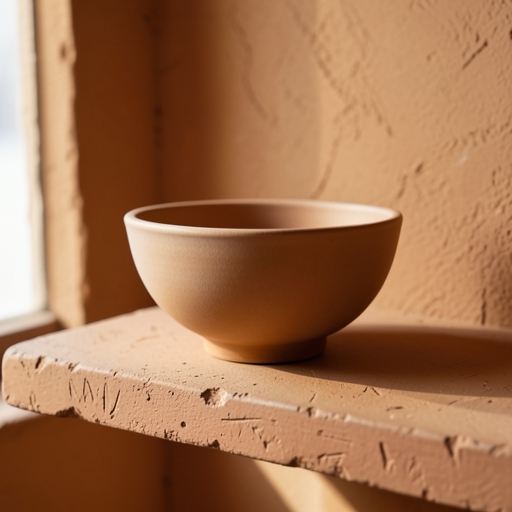
Burnished Ware
Burnished ware refers to pottery that has been polished to a smooth, glossy finish using a smooth stone, bone, or metal tool before firing. This ancient technique enhances the clay’s natural sheen without glaze, creating elegant, tactile surfaces that catch the light beautifully. Found in cultures from pre-Columbian Americas to Neolithic Europe, burnished pottery was often used for ceremonial or daily vessels. The process requires careful handling of leather-hard clay and precise pressure to achieve uniform luster. Burnishing not only improves visual appeal but also increases surface density, making the vessel slightly more water-resistant. Artisans today continue this tradition, valuing its simplicity and connection to early human craftsmanship. The method is celebrated in pottery workshops for its meditative rhythm and environmental friendliness, as it requires no chemical glazes. Burnished ware stands as a quiet testament to the beauty of natural materials and patient, hand-driven artistry.