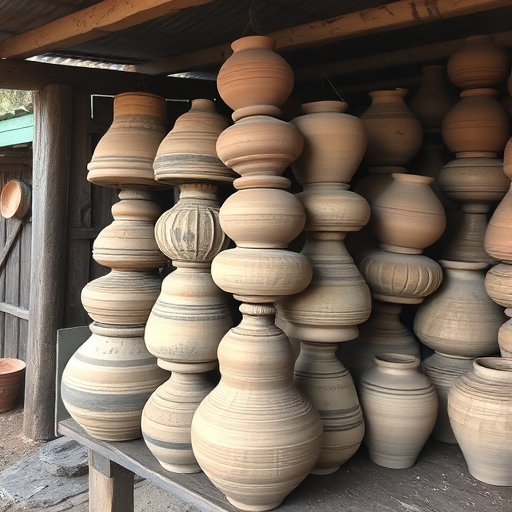
Coiled Vessels
Coiled vessels are handmade pottery formed by rolling long ropes of clay and stacking them in a spiral to build walls, then smoothing the seams by hand. This ancient technique, used by indigenous cultures worldwide, requires no wheel and relies solely on the potter’s skill and intuition. Coiling allows for the creation of large, asymmetrical, or uniquely shaped vessels that reflect personal or cultural expression. Once shaped, the surface is often smoothed, burnished, or decorated with incised patterns. The method is deeply connected to earth-based traditions and sustainable practices, using only natural materials. Today, coiling remains popular among contemporary ceramic artists and educators as a way to teach patience, spatial awareness, and cultural heritage. It is especially valued in community art programs for its accessibility and tactile nature, offering a direct, meditative link to the earliest forms of human creativity.